

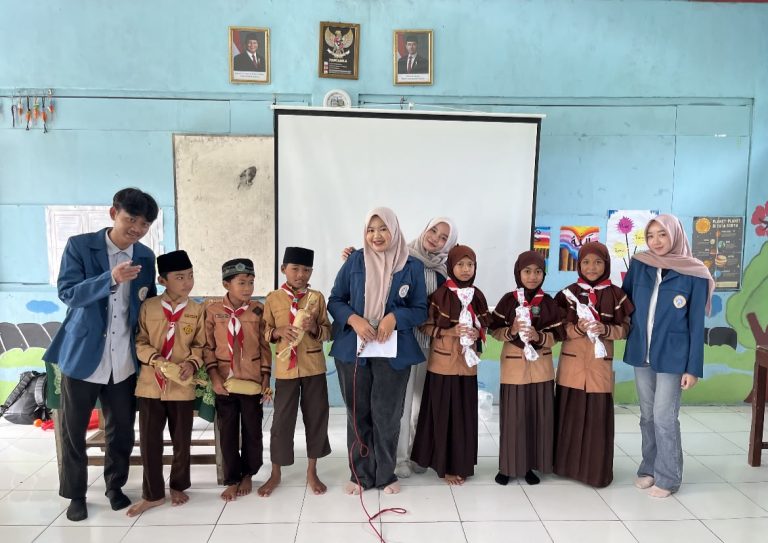
VOKASI NEWS – Health education using animated videos helps simplify complex concepts into materials that are easier for children to understand. Animation also creates a more engaging learning experience, encouraging students to stay focused and actively participate throughout the session.
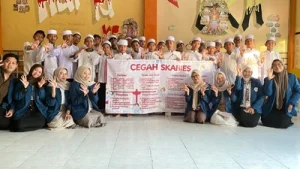
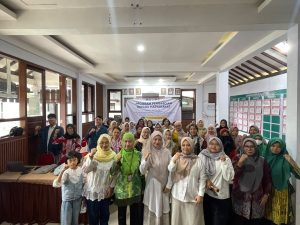
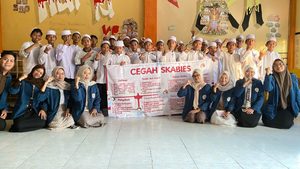
Diploma III Nursing students conducted this health education program on Saturday, February 28, 2026, at MIS Miftahul Ulum Tlogoagung, Kembangbahu District, Lamongan Regency. The activity formed part of a health promotion program organized by Group 2 of Class GR-4B, consisting of Diajeng Yasya Desylia Banowati, Mohamad Amril Ibad, Nova Erika Putri, and Siti Nur Cholidah Surgawati.
Children Breathe, but Do Not Yet Understand Their Lungs
Children breathe thousands of times every day. However, many of them still do not understand how the respiratory system works. They are often more familiar with gadgets, videos, and animated characters than with the organs inside their own bodies. This condition shows that health literacy among elementary school students remains relatively low, particularly for abstract topics such as the respiratory system.
Conventional lecture-based learning often makes it difficult for children to understand abstract concepts (Agustina et al., 2022). In today’s digital era, children absorb information more easily through visual learning. Therefore, educators need learning media that match children’s characteristics, interests, and cognitive development.
Educational approaches should also move beyond one-way information delivery. Instead, they should create interactive learning experiences that actively engage children throughout the learning process.
The Role of Diploma III Nursing Students
Diploma III Nursing students actively contributed to this community service program by providing health education at MIS Miftahul Ulum Tlogoagung, Lamongan Regency. Through this activity, they aimed to improve students’ understanding of the respiratory system and lung health using innovative learning strategies.
The team selected animated video as the main educational medium because it effectively attracts children’s attention. Animation combines visual elements, sound, and movement to improve comprehension (Firdausi & Istianah, 2022). Compared with conventional teaching methods, animated media creates a more enjoyable learning environment and encourages students to participate actively.
During the activity, the nursing students also facilitated discussions, invited students to ask questions, and maintained active interaction throughout the session. This approach helped connect theoretical concepts with children’s everyday experiences.
Animated Video as An Educational Medium
The respiratory system is one of the most difficult topics for elementary school students because they cannot directly observe its processes. Concepts such as airflow, gas exchange, and lung function require strong visual explanations. Animated videos help overcome this challenge by presenting complex biological processes in a simple and engaging way.
Previous studies have shown that animated videos significantly improve students’ understanding by transforming abstract concepts into concrete visual representations (Zahra & Sukma, 2025). Through these visualizations, students learn not only the structure of the respiratory system but also how each organ works together.
The activity also encouraged students to discuss factors affecting lung health, including cigarette smoke, air pollution, open waste burning, and environmental cleanliness. As a result, students connected classroom learning with situations they encounter in daily life.
Results and Meaning of The Activity
Before the educational session began, students completed a pre-test to measure their initial knowledge. After the session, they completed a post-test to evaluate their learning progress. The results demonstrated a clear improvement in students’ understanding of the respiratory system after participating in the animated video-based education.
The program’s success was reflected not only in improved test scores but also in greater awareness of healthy habits. Students better understood the importance of protecting their lungs by avoiding cigarette smoke and maintaining a clean environment.
Previous studies have also reported that video-based learning increases student engagement, learning motivation, and memory retention compared with conventional teaching methods (Astafrina et al., 2022). These findings further support the use of animated educational media as an effective approach to improving health literacy among elementary school students.
[ALSO READ: Salah Pilih Salep atau Krim? Kenali Sediaan Obat Setengah Padat]
Author : Siti Nur Cholidah Surgawati
Supervisor : Dr. Hafna Ilmy Muhalla, S.Kep., Ns., Sp.Kep.M.B.
Editor: Cheiza Xaviera (Vocational Branding Team)