

VOKASI NEWS – Have you ever wondered what you would say if you witnessed a traffic accident or someone suddenly collapsed in front of you? In emergency situations, every second matters. However, a fast response alone is not enough. People also need to deliver accurate and structured information to emergency responders. Incomplete or unclear information can delay assistance and increase the risk of adverse outcomes. Unfortunately, many adolescents still lack the knowledge and confidence to report emergencies effectively. Therefore, understanding how to communicate during emergencies is an essential life skill that should be introduced from an early age.
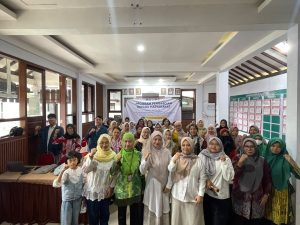
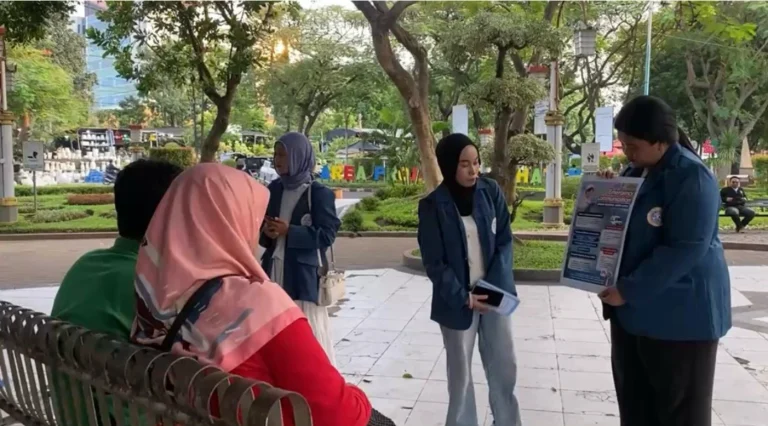
Recognizing the importance of emergency preparedness, students of the Diploma-III Nursing Program, Faculty of Vocational Studies, Universitas Airlangga, organized an emergency communication education program in June 2026 at Gresik Kota Baru (GKB) Park. The activity was conducted as part of a community health promotion program designed by Group 7, consisting of Sheila Intan Nur Safitri, Dika Ayu Pratiwi, Lutvia Ayu Salviana, and Yasa Gita Revika, under the supervision of Dr. Hafna Ilmy Muhalla, S.Kep., Ns., M.Kep., Sp.Kep.M.B. The program involved 20 adolescents from the GKB area. Facilitators conducted the program through interactive presentations, demonstrations, individual practice, simulations, and question-and-answer sessions. These activities encouraged active learning and improved participants’ emergency communication skills.
Emergency Communication Saves Valuable Time
The educational session began with an introduction to emergency communication and its role in emergency response systems. Participants learned that emergency communication is the process of delivering information quickly, accurately, and systematically to emergency responders so they can assess the situation and provide appropriate assistance. Studies show that effective communication improves patient safety, reduces communication errors, and accelerates emergency response in healthcare settings.
Facilitators introduced the essential information that participants should always convey during an emergency call. This includes the type of incident, the exact location, the number and condition of victims, potential hazards at the scene, and the type of assistance required. They also learned to remain calm while speaking. This approach helps responders understand the situation clearly and provide appropriate instructions before help arrives. In addition, participants were informed that emergency reports should focus on clear and factual information rather than lengthy explanations. Providing structured information enables emergency personnel to make rapid decisions and dispatch appropriate resources without unnecessary delays.
Learning the Talking by Order Method
The second session introduced the Talking by Order method. This simple communication strategy guides individuals to report emergency situations in a logical and sequential order. This approach helps prevent important information from being forgotten, especially when individuals experience panic during emergencies.
To strengthen participants’ understanding, facilitators introduced the SBAR (Situation, Background, Assessment, Recommendation) communication framework. Healthcare professionals widely use this framework to standardize information exchange. Participants learned how organized communication can minimize misunderstandings and improve coordination during emergency situations.
The learning process became more engaging through emergency simulations. Participants individually practiced reporting various emergency scenarios, such as traffic accidents, unconscious victims, and fire incidents, using the Talking by Order method. Each participant organized information systematically before contacting emergency services. Meanwhile, facilitators provided direct feedback to improve communication accuracy and confidence.
Knowing Emergency Services Before Emergencies Happen
Besides learning communication techniques, facilitators introduced emergency services that people can access in Indonesia. They learned about 112, the integrated public emergency call service available in many regions. They also learned about other emergency contacts provided by local governments, including ambulance and police emergency numbers. Facilitators encouraged participants to familiarize themselves with emergency services available in their local area before an emergency occurs.
The discussion also emphasized that panic remains one of the biggest barriers to effective emergency reporting. Therefore, facilitators encouraged adolescents to remain calm, speak clearly, provide complete information, and carefully follow the instructions given by emergency operators while waiting for professional assistance to arrive.
Throughout the activity, participants showed great enthusiasm by actively asking questions and participating in simulations. Participants asked various questions about reporting different emergency situations. They also asked what information should be prioritized and what actions should be taken while waiting for emergency responders. These interactions reflected the participants’ growing awareness of the importance of effective emergency communication.
Building Prepared Adolescents Through Emergency Education
This educational program is expected to improve adolescents’ preparedness and confidence in responding to emergencies within their communities. By understanding the Talking by Order method and practicing structured communication, adolescents are better equipped to assist themselves and others during critical situations.
Ultimately, emergency communication is not merely about making a phone call—it is about delivering the right information at the right time. Through effective communication, emergency responders can act more quickly and accurately. As a result, they can provide timely assistance and help save lives.
[ALSO READ: Edukasi Sediaan Obat Padat, Langkah Meningkatkan Kesadaran Masyarakat dalam Penggunaan Obat]
Author: Sheila Intan Nur Safitri
Supervisor: Dr. Hafna Ilmy Muhalla, S.Kep., Ns., M.Kep., Sp.Kep.M.B.
Editor: Cheiza Xaviera (Vocational Branding Team)