

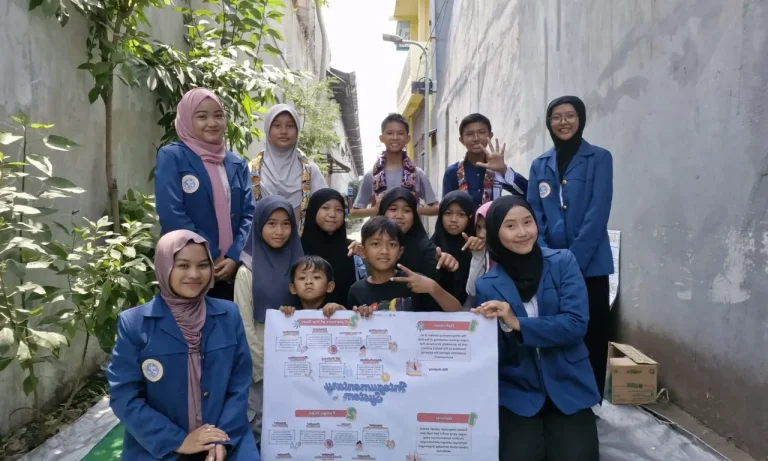
VOKASI NEWS – Who says learning about skin anatomy is difficult and boring? Dozens of minutes flew by as children in Kenjeran Village, Surabaya, enjoyed playing while learning about the integumentary system alongside D3 Nursing students from Universitas Airlangga. This activity proved that health education can be packaged in an enjoyable way without compromising the quality of the material delivered.
This skin health education activity was held on Saturday, April 11, 2026, at Jl. Kedinding Lor Gg. Blimbing Utara No. 9, Kenjeran, Tanah Kali Kedinding, Surabaya. The activity was part of a health promotion program designed by Group 5 GR-4A Nidya Athalia Nirmala, Zulfia Habidah, Dewi Humairo, and Asmawati Eka Kencananingsih under the guidance of Dr. Hafna Ilmy Muhalla, S.Kep., Ns., M.Kep., Ns., Sp.Kep.M.B. The activity involved 10 participants aged 9 to 14 years, using an interactive and educational approach.
Understanding the Integumentary System and Its Disorders
The integumentary system consists of the skin, hair, nails, sweat glands, and sebaceous glands that work together to protect the body and maintain balance. The skin also plays an important role in regulating body temperature, producing vitamin D, and protecting the body from external threats such as microorganisms, chemicals, ultraviolet radiation, and physical injury. The skin is composed of three main layers, namely the epidermis, dermis, and hypodermis, each with different functions (Yousef et al., 2023).
Children are among the groups vulnerable to skin disorders such as dermatitis, fungal infections, scabies, and acne during puberty. Scabies is caused by the mite Sarcoptes scabiei and spreads through direct skin contact or the use of shared personal items. Fungal infections commonly develop in humid environments with poor hygiene. Skin health can also be influenced by personal hygiene, environmental sanitation, nutritional status, and lifestyle habits (Yousef et al., 2023).
Learning Through an Interactive Wall Magazine and Games
Educational material was delivered using an interactive wall magazine themed “My Skin, My Amazing Protector!” designed with colorful illustrations and accessible language. The material included explanations about the integumentary system, skin functions, common disorders, and proper skin care.
“With the wall magazine and games, the children became more enthusiastic and understood the material more easily,” explained Asmawati Eka Kencananingsih as the presenter of the activity.
Before the presentation session, participants joined a pre-test game called “Guess Me” to measure prior knowledge while creating an engaging atmosphere. After the discussion and question-and-answer session, participants continued with a post-test game called “Match Me” by matching images with the correct functions related to the integumentary system. The activity demonstrated an improvement in participants’ understanding through correct answers during the post-test session.
Starting from Simple Habits
Maintaining healthy skin can actually begin with simple daily habits, such as bathing regularly, washing hands with soap, changing into clean clothes, and keeping nails trimmed short. Adequate intake of vitamins A, C, and E has also been shown to help maintain skin integrity and boost resistance to infection. Small habits built from an early age can become the foundation of long-term skin health (Yousef et al., 2023). Because healthy skin is not just about appearance it is also a reflection of overall bodily health.
[READ MORE: Pengalaman PKL dan Peningkatan Kompetensi Mahasiswa D4 TLM Unair di RS Islam A. Yani Surabaya]
Writer: Zulfia Habidah
Editor: Sinta Rahmah (Tim Vokasi Branding)