

VOKASI NEWS – Health education does not always have to rely on conventional lectures. Educational songs offer an enjoyable way to help children understand health-related topics. Simple melodies and easy-to-follow lyrics help students remember information more easily. In addition, songs increase students’ participation during the learning process. Integrating music into health education also creates an active and interactive classroom atmosphere. As a result, children can retain the knowledge they acquire more effectively (Sefriarni et al., 2024).
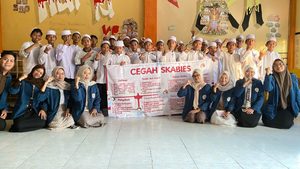
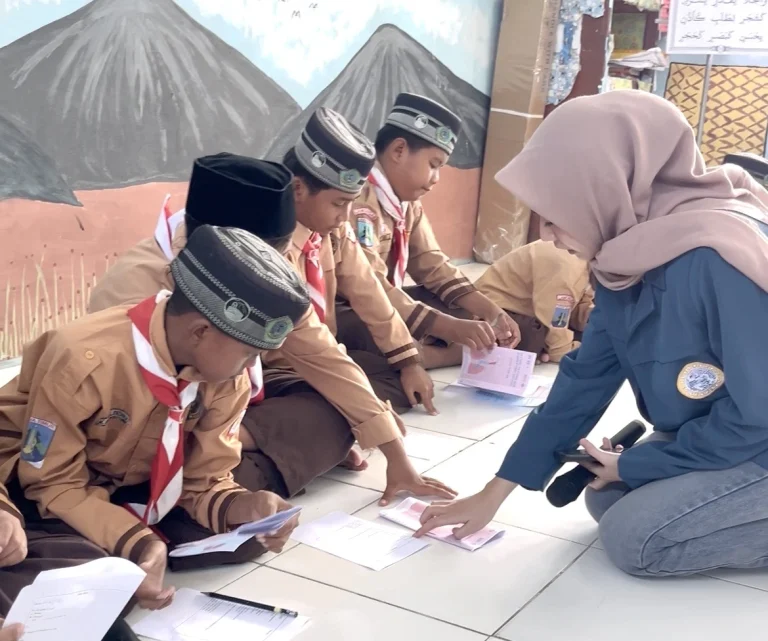
Diploma III Nursing students of Class GR-4B Group 2 organized this health education activity on Saturday, February 28, 2026, at MIS Miftahul Ulum Tlogoagung, Kembangbahu District, Lamongan Regency. The group consisted of Diajeng Yasya Desylia Banowati, Mohamad Amril Ibad, Nova Erika Putri, and Siti Nur Cholidah Surgawati. They conducted the program as part of a community health promotion initiative. The activity aimed to improve elementary school students’ understanding of the respiratory system. At the same time, it encouraged them to develop healthy habits through enjoyable learning methods.
Learning Through Educational Songs
Children understand learning materials more effectively when teachers present them in an engaging and enjoyable way. Therefore, the nursing students introduced an educational song that explained the respiratory organs, the breathing process, and simple ways to maintain healthy lungs. They wrote the lyrics using simple language so the children could easily follow and remember them. Through repeated singing, students memorized the sequence of the respiratory organs without feeling that they were memorizing scientific concepts.
The classroom atmosphere became more lively as all students sang together while performing simple movements that illustrated the breathing process. Consequently, the activity helped students stay focused and enthusiastic throughout the learning session. Moreover, the songs reduced boredom and encouraged students to participate actively until the end of the activity (Agustina et al., 2022).
The Active Role of Nursing Students
The nursing students guided every stage of the educational program. Before the session began, they administered a pre-test to measure the students’ initial knowledge of the respiratory system. Next, they presented the educational material briefly and reinforced it by singing the educational song together.
Throughout the session, the nursing students encouraged participants to ask questions and answer simple quizzes related to the song’s lyrics. This approach helped students connect the song with the health information they had learned. As a result, they developed a better understanding of the respiratory system. The nursing students also explained several factors that may negatively affect respiratory health, including cigarette smoke, air pollution, dust, and the habit of burning household waste. In addition, they encouraged students to exercise regularly, eat nutritious foods, maintain environmental cleanliness, and wear masks in dusty environments (Anadira et al., 2025).
Learning Outcomes
At the end of the activity, the nursing students administered a post-test to evaluate the participants’ knowledge. The results showed that most students identified the respiratory organs, explained their functions, and recalled healthy behaviors that support respiratory health. Many students also sang the educational song again while answering questions. These findings indicated that the song helped them remember the learning material more effectively (Kori et al., 2025).
The improvement in post-test scores reflected the success of this activity. In addition, the students remained enthusiastic throughout the learning process. Educational songs created a learning experience that was more enjoyable, interactive, and easier to understand. Meanwhile, the nursing students strengthened their communication and health education skills by applying creative teaching methods. Therefore, educational songs have the potential to become an innovative learning medium that promotes health literacy and encourages children to maintain healthy respiratory habits from an early age.
[ALSO READ: Pengalaman Belajar Mahasiswa D-III Keperawatan UNAIR melalui Magang Medikal Bedah di RSUA]
***
Author: Diajeng Yasya Desylia Banowati
Supervisor: Dr. Hafna Ilmy Muhalla, S.Kep., Ns., Sp.Kep.M.B.
Editor: Cheiza Xaviera (Vocational Branding Team)