


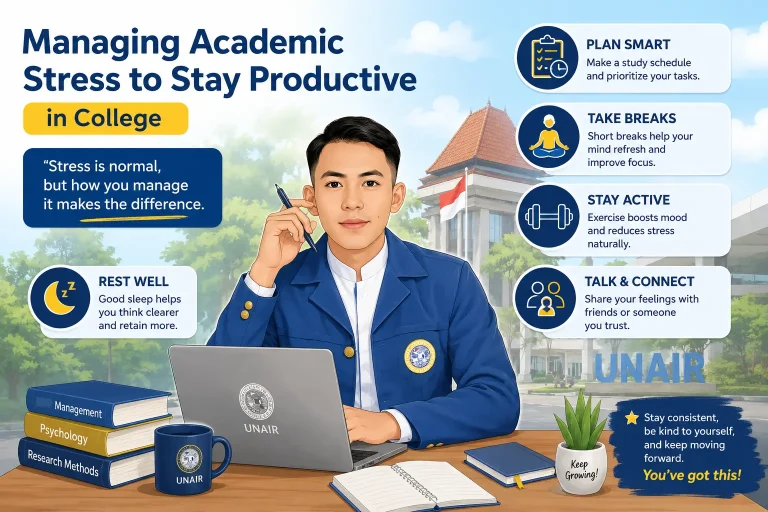
VOKASI NEWS – College is often celebrated as a time of personal growth, exciting discoveries, and new friendships. However, beneath the surface of vibrant campus life lies a less glamorous reality: academic stress. Between tight assignment deadlines, dense reading loads, unexpected pop quizzes, and the pressure of maintaining a good GPA, it is incredibly easy for university students to feel completely overwhelmed.
When stress is left unchecked, it does not just hurt your mental well-being; it actively reduces your productivity, leaving you stuck in a cycle of procrastination and exhaustion. The secret to thriving in college is not avoiding stress entirely. Which is nearly impossible, but learning how to manage it effectively so you can maintain your momentum.
The Illusion of “Powering Through”
When midterms or finals approach, the instinctive reaction for many students is to pull all-nighters, consume massive amounts of caffeine, and isolate themselves in the library. This brute-force method rarely works long-term. Chronic stress triggers a “fight or flight” response in the brain, which actually impairs the prefrontal cortex, the exact region you need for critical thinking, memory retention, and problem-solving. In short, studying for eight hours straight while highly stressed is far less effective than studying for three hours with a calm, focused mind.
Actionable Strategies for Academic Resilience
To break the cycle of stress and reclaim your productivity, you need a structured approach to your daily routine. Here are three highly effective habits you can start implementing today: The Pomodoro Technique: Instead of staring at a textbook for hours, break your study blocks into intervals. Work with intense focus for 25 minutes, then take a hard 5-minute break to stretch or drink water. Repeat this four times, then take a longer 30-minute break. This keeps your brain fresh and prevents cognitive fatigue. Ruthless Prioritization (The Eisenhower Matrix): Not every task deserves your immediate energy.
Divide your to-do list into what is urgent and important (like a paper due tomorrow) versus what is important but not urgent (like reading a chapter for next week). Attack the urgent tasks first to instantly lower your anxiety levels. Protect Your Baseline Health: Your brain is a physical organ. If you feed it junk food, deprive it of sleep, and never let it rest, it will eventually crash. Aim for at least 7 hours of sleep, especially during exam weeks. Sleep is when your brain consolidates memory, meaning it actually processes and stores what you studied that day.
Shifting Your Mindset
Ultimately, managing academic stress requires a change in perspective. University is a marathon, not a sprint. Perfectionism is often the root cause of academic anxiety; realizing that a single bad grade or a flawed essay will not ruin your entire future can be incredibly liberating.
Be kind to yourself, utilize campus counseling or tutoring resources if you need them, and remember that taking care of your mental health is a fundamental part of being a successful student. By implementing structured habits and setting realistic boundaries, you can transform your college experience from a stressful chore into a productive, rewarding journey.
[BACA JUGA: Penyelesaian SP2DK Atas Pengakuan Biaya dan Margin Laba PT X Identifikasi Permasalahan Pajak]
Penulis: Ferdiansyah Putra Zainudin
Editor: Vioretha (Tim Branding Vokasi)