

VOKASI NEWS – In a world increasingly dominated by screens and digital devices, children’s eye health has never been more at risk. Yet, it remains one of the most overlooked aspects of pediatric health in community settings.
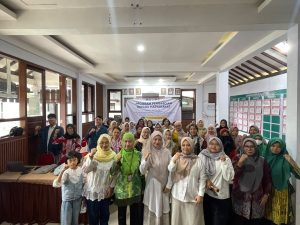
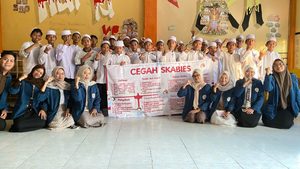
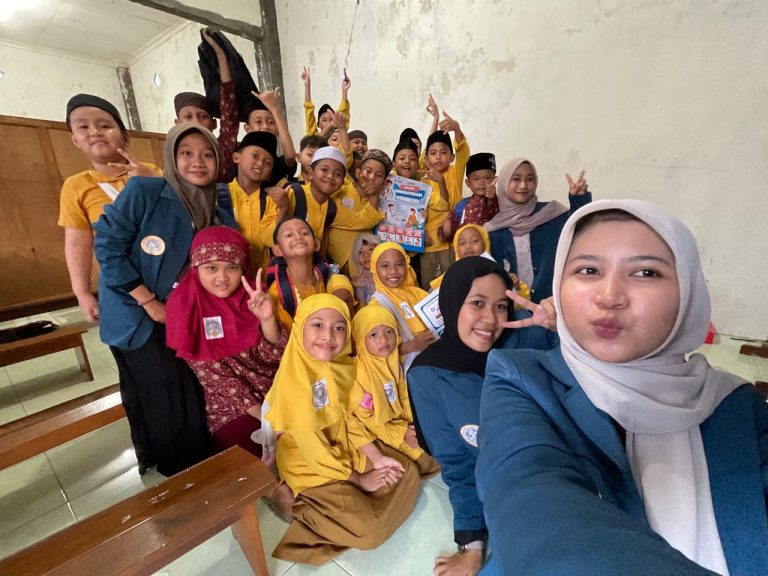
Recognizing this gap, Diploma III Nursing students from Universitas Airlangga (UNAIR) took a meaningful step forward by conducting a community-based health promotion program. The program took place at Graha Bunder Asri Mosque, Gresik, on Wednesday, 16 April 2026. The program focused on introducing eye anatomy, the vision process, and proper eye care for children.
Five D-III Nursing students of UNAIR, Putryana Waluika, Salsabilah Lutfiah, Gadis Rahayu Pratiwi, Novia Dwi Aryanti, and Qismah Nuroniah initiated and delivered the program. The activity was conducted as part of their community nursing practicum. It reflects UNAIR’s commitment to producing graduates who are clinically competent and socially engaged. Moreover, it also prepares students to deliver health education beyond the walls of hospitals and clinics.
A Mosque As A Stage For Health Awarness
The choice of Graha Bunder Asri Mosque as the venue was both strategic and symbolic. As a central hub for community activity in the Graha Bunder Asri residential area, the mosque provided an accessible, trusted, and welcoming environment. It naturally brought together children, parents, and community members from diverse backgrounds. By bringing health education to a place where people already gather, the students made the information easier to access. As a result, the message reached community members who might not otherwise seek out health education on their own.
From Anatomy To Action : What The Children Learned
The health promotion session was delivered in English. This approach aligned with the program’s objective of developing international health communication competencies among nursing students. However, the facilitators ensured that the key messages were also delivered in Indonesian. They also used child-friendly language to maximize comprehension and engagement among the young participants.
The session covered three core areas. First, children were introduced to the basic anatomy of the human eye. They learned the names and functions of key eye structures, including the cornea, lens, retina, and optic nerve. The material was presented through interactive and visually engaging activities.
Second, the students explained the process of vision. They described how light enters the eye, how the brain interprets visual signals, and why conditions such as nearsightedness and farsightedness occur. Third, and perhaps most practically, children received guidance on how to care for their eyes in daily life. The session covered limiting screen time, reading in adequate lighting, eating foods rich in vitamin A, and the importance of routine eye check-ups.
“We wanted children to understand that their eyes are precious and that small daily habits can make a big difference in the long run. When children understand why something matters, they are much more likely to remember it and practice it.” said Putryana Waluika, D-III Nursing Student UNAIR.
Interactive methods, including question-and-answer sessions, simple demonstrations, and health quizzes, were used throughout the program. These activities helped sustain the children’s attention and made the learning process more enjoyable. The participants showed great enthusiasm throughout the activity. Moreover, the children eagerly answered questions and participated in eye health quizzes. Their enthusiasm reflected the effectiveness of the students’ approach in making complex anatomical concepts accessible and enjoyable.
Parents Take Notice
The impact of the session extended beyond the children themselves. Several parents who accompanied their children expressed their appreciation for the initiative. They noted that community-based health education like this is rarely available outside of formal healthcare settings.
“My child spends a lot of time on his tablet, and I honestly didn’t realize how harmful that could be for his developing eyes. This program opened our eyes too, not just the children’s. We hope the neighborhood continues to host events like this on a regular basis.” Said one of the community members.
Nursing Education Meets Community Service
This activity is a direct embodiment of UNAIR’s Tri Dharma the three pillars of higher education in Indonesia: teaching, research, and community service. For D-III Nursing students, fieldwork in community settings is not merely an academic requirement. It is also a formative experience that shapes the kind of healthcare professionals they will become.
By designing and delivering a health promotion program that was culturally sensitive, age-appropriate, and scientifically grounded, Putryana Waluika, Salsabilah Lutfiah, Gadis Rahayu Pratiwi, Novia Dwi Aryanti, and Qismah Nuroniah demonstrated compassionate and competent nursing practice. They showed empathy and effective communication throughout the program. They also demonstrated a genuine commitment to improving the well-being of the communities they serve.
As digital lifestyles continue to place growing strain on children’s vision, programs like this serve as a vital reminder that prevention begins with education. Equipping children with proper knowledge at an early age can help protect their eye health in the future. When delivered with care and creativity, education has the power to create meaningful and lasting change in children’s lives.
Penulis: Gadis Rahayu Pratiwi
Editor: Vioretha (Tim Vokasi Branding)