


VOKASI NEWS – Have you ever thought that something as common as an injection could pose serious health risks when performed incorrectly? Injections are frequently used in healthcare settings for treatment, vaccination, and disease management. However, improper injection practices can lead to infections and tissue injuries. They can also increase the risk of transmitting bloodborne diseases such as hepatitis and HIV. This highlights the importance of understanding safe and proper injection techniques. Such knowledge is essential not only for healthcare professionals but also for the wider community.
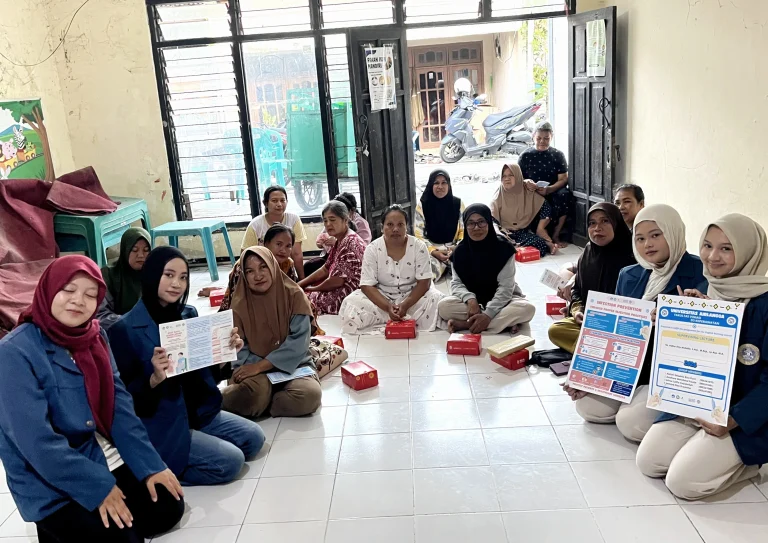
Based on this importance, students of the Diploma III Nursing Program, Faculty of Vocational Studies, Airlangga University, held a health education activity on Sunday, April 26, 2026, at Jl. Medokan Timur Gg. 4 No. 53, Surabaya. This activity was part of a health promotion program designed by Group 9 GR-4C. The team consisted of Nailah Salsabila Riva Putri, Azzahara Wahidatul Fauzia, Afriza Lutfia Inayatullah, and Jasmine Dian Pramitha under the guidance of Dr. Hafna Ilmy Muhalla, S.Kep., Ns., M.Kep., Ns., Sp.Kep.MB. This activity involved 15 participants. It was designed to be interactive and engaging, combining presentations, demonstrations, educational videos, discussions, and hands-on learning experiences.
Safe Injection Starts with Knowledge
The material presented began with a basic introduction to injections. Participants learned about the various types of injections commonly used in healthcare. These included intramuscular (IM), subcutaneous (SC), intravenous (IV), and intradermal (ID) injections.ach type has a different purpose, injection site, and administration technique. Understanding these differences is crucial for optimal drug effectiveness and minimizing the risk of tissue injury (WHO, 2021).
Furthermore, participants received an explanation of aseptic and antiseptic principles as the main foundations of infection prevention. Through this material, participants were encouraged to understand the importance of washing hands before the procedure and using sterile, single-use instruments. They also learned the importance of cleaning the injection site with antiseptic and maintaining a clean environment during the procedure. Safe injection practices must always be supported by the application of aseptic technique and the use of sterile syringes to prevent infection and improve patient safety (WHO, 2022).
Participants also gained an understanding of common injection errors. These included the use of non-sterile equipment, incorrect injection site selection, improper injection techniques, and unsafe medical waste disposal. These errors can lead to complications such as local infections, abscesses, hematomas, nerve injuries, and the transmission of blood-borne diseases such as hepatitis B, hepatitis C, and HIV (Hutin et al., 2022; CDC, 2024).
Learning Safe Injection Techniques to Prevent Infections
The educational atmosphere became even more engaging when students demonstrated proper injection techniques. Participants were able to directly observe the stages of preparing equipment, selecting an injection site, and how to safely dispose of medical waste. This demonstration helped participants understand the application of theory in real-life situations, making the material easier to understand and remember.
This activity not only focused on the injection process but also highlighted the importance of household medical waste management. Many people are unaware that used syringes can be source of danger if disposed of carelessly. Therefore, participants were educated on how to dispose of sharps in special, safe containers before handing them over to healthcare facilities for further management.
Through interactive discussions and question-and-answer sessions, participants demonstrated high enthusiasm. A variety of questions arose, ranging from the use of injections in diabetes patients to how to prevent post-injection infections. These interactions demonstrated the public’s strong need for practical health information that is easy to apply in everyday life.
The Importance of Collective Awareness in Injection Safety
This educational activity is expected to raise public awareness that injection safety is a shared responsibility. With adequate knowledge, people can be more careful when administering injections, both independently and when assisting family members who require home care.
Ultimately, safe injections are not only about successfully administering medication, but also about protecting patients, healthcare workers, families, and the surrounding environment. Because sometimes, protecting health begins with understanding small things like how to administer injections safely and correctly.
[READ MORE: Education on Illegal Injection and Repeated Use of Syringes among Young Generation Groups]
Author: Afriza Lutfia Inayatullah
Supervisor: Dr. Hafna Ilmy Muhalla, S.Kep., Ns., M. Kep., Ns., Sp. Kep.MB
Editor: Aghnia Faiza (Tim Branding Vokasi)