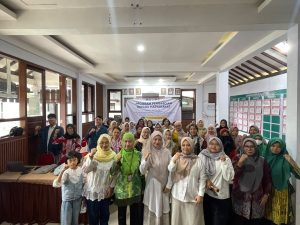


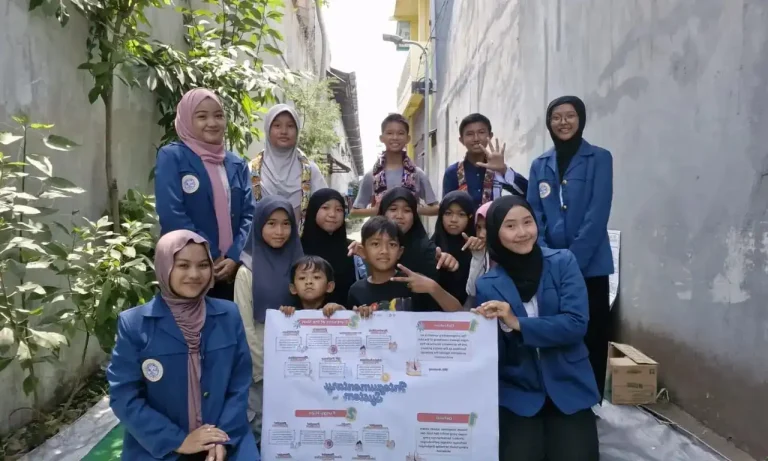
VOKASI NEWS – Group 5 of the Semester 4 Vocational Nursing students from VOKASI UNAIR held an educational activity at Jalan Kedinding Lor, Kenjeran Village, Tanah Kali Kedinding District, Surabaya City. The activity was conducted on Saturday, April 11, 2026, and involved 10 children aged 9–14 years.
The participants were selected based on predetermined criteria, especially their age group and their relevance to the topic of the integumentary system. The material focused on hygiene, skin health, and proper daily skin care.
This activity aimed to increase children’s knowledge and awareness about the importance of maintaining healthy skin. Through this program, the participants were introduced to simple information about how to prevent skin disorders, maintain body cleanliness, and apply proper daily hygiene habits.
Introducing Skin Health in a Fun Way
The activity was designed to be fun and interactive. This approach was used so that the children could learn in a comfortable atmosphere without feeling pressured.
During the session, the students explained several basic habits related to skin and body hygiene. The children were encouraged to understand the importance of bathing regularly, washing their hands, using soap, wearing clean clothes, and avoiding habits that may cause skin problems.
Through simple explanations, the participants were expected to understand that skin health is an important part of overall health. Building good hygiene habits from an early age can help children prevent common skin problems in their daily lives.
Low Enthusiasm When English Terms Were Introduced
One important issue was found during the activity. The participants showed low enthusiasm when English terms were introduced. Some children looked hesitant, shy, and less interested when they heard English words related to health and hygiene.
Simple words such as skin, clean, wash, soap, and healthy were still unfamiliar to some of them. This situation showed that English was still considered difficult, confusing, or even intimidating by several participants.
This lack of enthusiasm toward English needs more attention. In the modern era, English is no longer only an additional skill. It has become an important ability that supports education, communication, and access to wider information.
English as an Important Skill for the Future
Many sources of knowledge use English, including information related to health, technology, science, and digital media. Therefore, children need to be introduced to English from an early age so they can become more confident and better prepared for the future.
The low interest shown by the participants may occur because English is often taught in a formal or difficult way. Some children may feel afraid of making mistakes, mispronouncing words, or being laughed at by their friends. As a result, they become passive and less willing to try.
This condition shows that learning English should not always be done through memorization or classroom-style lessons. English can also be introduced through simple, fun, and familiar activities that are close to children’s daily lives.
Combining Health Education and English Vocabulary
Health education activities can become a good opportunity to introduce English vocabulary in a natural way. When teaching children about skin hygiene, facilitators can introduce simple English words related to the topic.
For example, the word skin can be connected with body parts. The word soap can be connected with bathing, while the word clean can be connected with daily hygiene habits. By linking English words with real objects and daily activities, children may understand the meaning more easily.
This approach can make English feel closer and less intimidating. Children can learn new vocabulary without feeling forced to memorize it. In this way, health education does not only increase children’s awareness about skin care, but also helps them become more familiar with English.
A Lesson for Future Educational Programs
The lack of enthusiasm found in this activity should not be seen as a failure. Instead, it can be viewed as an important lesson for designing more engaging educational programs in the future.
Children still need encouragement, guidance, and a supportive environment to learn English. Facilitators, teachers, and parents have an important role in helping children build confidence. Children should be praised when they try, even if their pronunciation or answers are not perfect.
Future activities are expected to not only focus on health education, but also include simple English learning as part of the program. By combining health topics with English vocabulary, children can gain two benefits at the same time. They can learn how to maintain their health while becoming more familiar with English.
Through a fun and supportive approach, children are expected to become more confident in learning, asking questions, and trying to use new vocabulary. This simple step can help build their confidence and broaden their access to knowledge in the future.
[BACA JUGA: Edukasi Luruskan Miskonsepsi Penggunaan Obat Topikal Pada Masyarakat Babatan]
Penulis: Asmawati Eka Kencananingsih
Editor: Inviana (Tim Vokasi Branding)