

VOKASI NEWS – Appropriate medication administration plays an important role in achieving optimal therapeutic outcomes while minimizing medication-related complications. However, medication errors remain common in household settings, particularly among housewives who are primarily responsible for managing their families’ healthcare. Common mistakes include incorrect dosing, premature discontinuation of treatment, and limited awareness of potential adverse drug reactions.
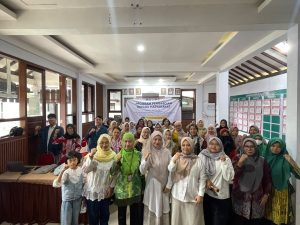
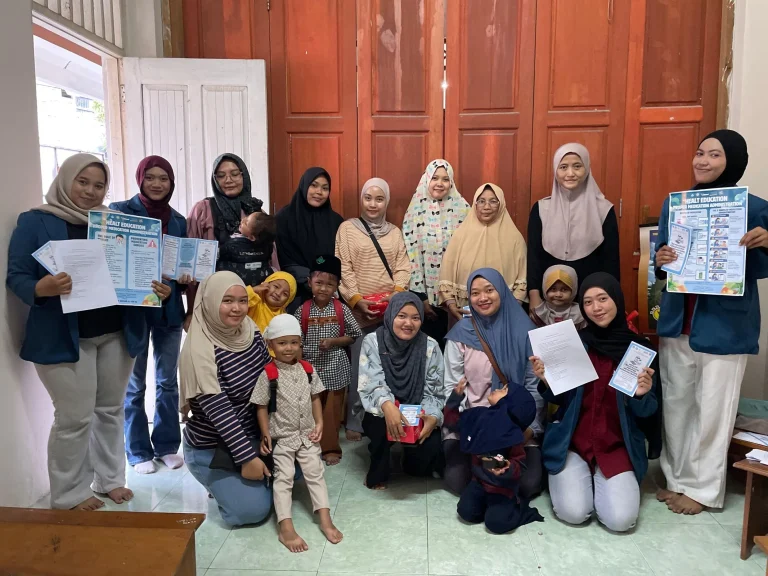
Recognizing the importance of improving medication safety at home, a community-based health education program was conducted on April 16, 2026, at Jl. Topaz 5, Kebomas, Gresik. The program aimed to increase housewives’ knowledge of proper and safe medication administration through interactive educational activities.
Health Education for Housewives
The program involved approximately 30 housewives from the surrounding community. Before receiving the educational materials, participants completed a pre-test to assess their baseline knowledge of safe medication administration.
The educational session combined several learning methods, including lectures, printed leaflets, medication demonstration boards, group discussions, and practical demonstrations. At the end of the session, participants completed a post-test to evaluate changes in their knowledge following the intervention.
Understanding Safe Medication Administration
The educational materials focused on the Seven Rights of Medication Administration, including the right patient, right medication, right dose, right time, right route, right documentation, and right education. Participants also learned about the major routes of medication administration, namely oral, parenteral, topical, inhalational, and rectal administration.
Particular emphasis was placed on accurate dosing, appropriate medication timing, and correct administration techniques to reduce medication errors and improve treatment safety. In addition, participants learned about common medication-related errors that frequently occur in household settings and practical strategies to prevent them.
Knowledge Improved after Health Education
Participants showed strong enthusiasm throughout the program by actively engaging in discussions and practical demonstrations. Comparison of the pre-test and post-test results demonstrated a substantial improvement in participants’ knowledge. Before the intervention, many participants had limited understanding of safe medication administration. After the educational session, they demonstrated better comprehension of appropriate medication practices and the safety measures needed to ensure effective medication use at home.
Overall, the health education program successfully improved housewives’ knowledge of proper and safe medication administration while encouraging more rational medication use. Improved knowledge is expected to strengthen household medication management and reduce preventable medication errors. Therefore, similar community-based health education programs should be implemented continuously. Healthcare professionals and university students are also encouraged to support these initiatives through ongoing public education and advocacy for the rational and safe use of medicines.
[ALSO READ: Kesalahan Penentuan Tarif Progresif Pasal 17 sebagai Penyebab Terbitnya SP2DK]
***
Author: Tia Sukma Agustin
Supervisor: Dr. Hafna Ilmy Muhalla, S.Kep., Ns., M.Kep., Sp.Kep.M.B.
Editor: Cheiza Xaviera (Vocational Branding Team)