

VOKASI NEWS – Hearing plays an important role in everyday life because it supports communication, learning, and social interaction. However, many children still have limited knowledge about ear health and the auditory system. As a result, they may develop habits that negatively affect their hearing in the future.
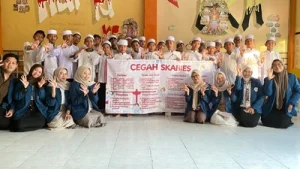
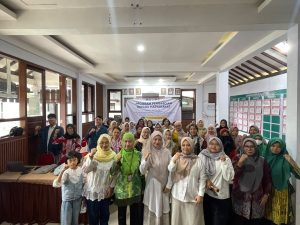
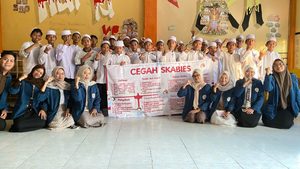
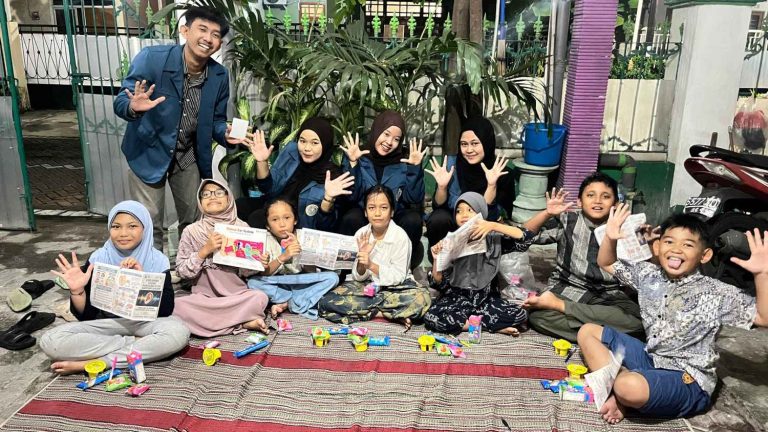
To increase children’s awareness of ear health, students from the Diploma III Nursing Program, Faculty of Vocational Studies, Universitas Airlangga (UNAIR), organized a health education program using a Project-Based Learning (PjBL) approach. The students held the program, entitled “The Auditory System,” on Tuesday, April 21, 2026, at Shapire 1, GBA Housing Complex, Gresik.
Group 3 GR-4B organized the program. The group consisted of Muhammad Rizki Firmansyah, Tabita Arinda Niswa, Dinda Rini Ayustin, and Shofia Nurlaili Farjrin. Dr. Hafna Ilmy Muhalla, S.Kep., Ns., M.Kep., Sp.Kep.M.B., supervised the activity. The program targeted children aged 10–12 years and introduced the structure of the ear, the hearing process, and practical ways to maintain hearing health.
Learning the Auditory System through Interactive Media
The students selected Project-Based Learning (PjBL) as the main educational approach. This method encourages children to participate actively through discussions, hands-on experiences, and creative activities. As a result, the participants understood the learning materials more easily through visual media and simple practical exercises.
The students introduced the anatomy of the outer, middle, and inner ear. In addition, they explained how the ear receives sound waves and how the brain processes them into hearing information.
To make the session more engaging, the students used hearing system boards, educational leaflets, games, and interactive question-and-answer activities. Through these learning media, the participants understood the anatomy and physiology of the auditory system more effectively.
Building Children’s Awareness of Ear Health
Besides introducing ear anatomy, the students explained common hearing disorders and simple ways to maintain ear health. For example, they encouraged the participants to avoid excessive noise exposure, maintain proper ear hygiene, and protect their hearing during daily activities.
The children showed great enthusiasm throughout the program. They actively answered questions, participated in educational games, and interacted with the learning materials.
“Through this auditory system education, participants are expected to understand the function of the ear and the importance of maintaining hearing health from an early age. Delivering health information through interactive methods helps children understand complex concepts more easily,” said Muhammad Rizki Firmansyah, a Diploma III Nursing student at the Faculty of Vocational Studies, Universitas Airlangga.
Vocational Learning and Community Engagement
Furthermore, this project helped the students strengthen their communication skills, health education competencies, and practical nursing experience in the community.
The program also demonstrates how vocational education connects classroom knowledge with real-world practice. By applying their nursing knowledge directly in the community, the students gained valuable professional experience while contributing to public health education.
Ultimately, this initiative reflects the Faculty of Vocational Studies’ commitment to producing graduates with professional competence, effective communication skills, and strong social awareness. Creative health education also helps children understand the importance of maintaining overall health, including the auditory system.
[READ MORE: Mahasiswa Vokasi Unair Ungkap Penyebab Tipisnya Margin UMKM Mild Sleep]
Writer: Muhammad Rizki Firmansyah, Tabita Arinda Niswa, Dinda Rini Ayustin, Shofia Nurlaili Farjrin
Edior: Sinta Rahmah (Tim Vokasi Branding)