

VOKASI NEWS – Eye health is an important aspect that supports quality of life and daily productivity. Good vision plays a significant role in learning, working, and social interactions. However, the increasing use of digital devices and the persistence of various myths about eye health may influence public behavior in maintaining visual function. One factor associated with myopia is the habit of using gadgets at a very close viewing distance.
Within the family environment, mothers play an essential role in managing family health. Decisions related to lifestyle habits, children’s gadget use, and medication administration are often supervised by mothers. Therefore, improving mothers’ knowledge of eye health is expected to create positive impacts on all family members. Health education targeting mothers can contribute to healthier behaviors within the household and promote better awareness of eye care.
Eye Health Education for Mothers
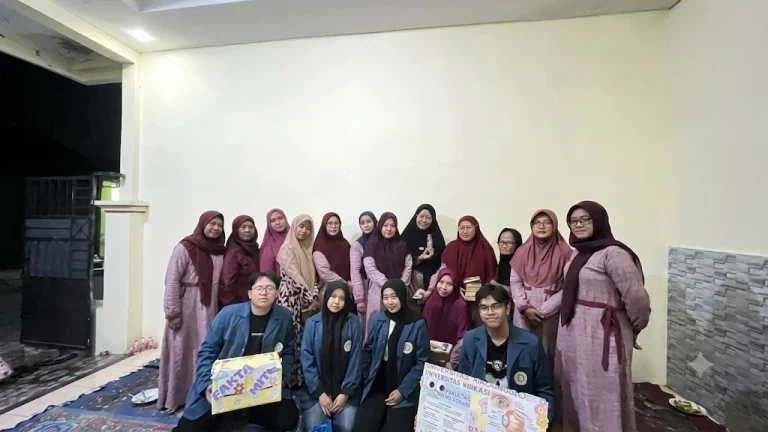
Based on these considerations, Group 3 of the Diploma III Nursing Program conducted a community service activity entitled Healthy Vision, Brighter Life on Friday, April 17, 2026, at RT 043 RW 010, Kepuh Kemiri Village, Tulangan District, Sidoarjo Regency. The activity involved 16 housewives and aimed to improve knowledge and awareness regarding eye health. The program was carried out by Napsiatul Ulum together with Ussy Rahmasari, Nino Gilang Samudra, and Muhammad Angga Bakti Maida as team members. Every stage of the activity was designed to deliver practical and understandable health information that could be applied in everyday life.
The activity began with a pre-test to assess participants’ baseline knowledge of eye health. Educational materials were then delivered using posters containing simple eye anatomy, visual functions, and common eye disorders. Leaflets were also distributed so that participants could review the information at home after the session. Educational media such as posters, leaflets, and visual screening activities have been reported to effectively improve community knowledge regarding eye health.
Interactive Educational Activities
To increase participant engagement, the educational session incorporated a myth-and-fact game tailored to the characteristics of the participants. A spinning arrow was used to select statements related to eye health, and participants were asked to determine whether each statement was a myth or a fact. After responses were given, explanations based on scientific evidence were provided. This approach encouraged active participation and created a more enjoyable learning environment.
Participants showed considerable enthusiasm throughout the activity. Questions and discussions emerged during the myth-and-fact session, particularly regarding common beliefs about eye health. One participant stated that the activity helped clarify information that had long been accepted without understanding its scientific basis. This response highlights the continuing need for community-based health education to address misconceptions and improve public health literacy.
Improvement in Participants’ Knowledge
The evaluation results indicated an increase in participants’ knowledge after the educational intervention. The average pre-test score of 80.6% increased to 92.5% in the post-test. This improvement of 11.9% suggests that the educational materials were well understood by the participants. The findings also demonstrate that combining visual media with interactive methods can effectively support community health learning.
The myth-and-fact game revealed several misconceptions that still exist within the community. Most participants correctly understood that prolonged contact lens use may harm eye health. However, some participants still believed that certain foods could reduce myopia. On the other hand, all participants recognized that improper smartphone use may negatively affect eye health.
At the end of the activity, participants were offered visual acuity screening using a Snellen Chart. Due to the limited time available during the evening session, only one participant volunteered for the examination. The result showed a visual acuity of 6/6, indicating normal vision. This simple screening activity also served to increase awareness regarding the importance of early detection of vision problems.
The activity demonstrated that health education combined with visual materials and interactive methods can effectively improve public knowledge of eye health. By strengthening mothers’ understanding as key family health managers, healthy eye-care practices are expected to be implemented more consistently within households.
The knowledge gained from the activity may also be shared with other family members, extending the benefits beyond the participants who attended. Through these efforts, the vision of Healthy Vision, Brighter Life can contribute to healthier families and improved quality of life.
[READ MORE: Narrative-Driven Digestive System Education to Delight Schoolchildren]
Writer: Napsiatul Ulum
Activity Contributors: Ussy Rahmasari, Nino Gilang Samudra, Muhammad Angga Bakti Maida
Supervisor: Dr. Hafna Ilmy Muhalla, S.Kep., Ns., M.Kep., Ns., Sp.Kep.M.B.
Editor: Vioretha (Tim Vokasi Branding)