


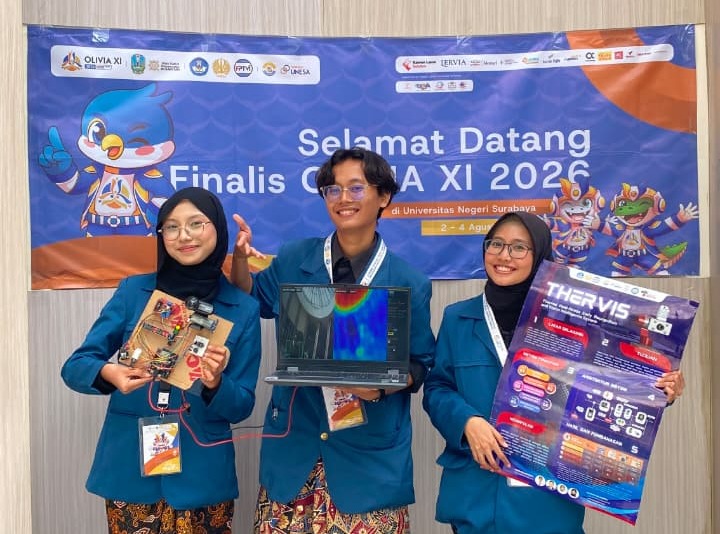
VOKASI NEWS – Three students from the Faculty of Vocational Studies at Universitas Airlangga, comprising the “Trio Kalem” team, secured 2nd place in the Science & Technology category. This achievement was attained at the 11th Indonesian Vocational Olympiad (OLIVIA) in 2026. The three students are Muhammad Naufal Afif (Instrumentation and Control Engineering Technology), Isra Dzorifatun Nisa (Medical Laboratory Technology), and Rona Elita Maharani (Occupational Health and Safety)—all from the Diploma IV (Applied Bachelor) study programs.
The competition, organized by the Indonesian Vocational Higher Education Forum, took place from August 2 to 4, 2026, at the State University of Surabaya. This achievement was secured with a project titled THERVIS (Thermal Vision-based Integrated Control System). The system regulates thermal conditions based on the Wet Bulb Globe Temperature (WBGT) and integrates thermal computer vision to help prevent heat stress among industrial workers.
The THERVIS concept stems from increasingly extreme global climate fluctuations that threaten to disrupt ecosystems and reduce worker productivity in high-temperature environments. This solution was developed through the collaboration of three disciplines: Instrumentation and Control Engineering Technology, Medical Laboratory Technology, and Occupational Health and Safety.
Stemming from a Collaboration Across Three Scientific Disciplines
The process leading to THERVIS began with internal discussion sessions where each member took turns presenting their academic backgrounds. From these conversations, a common thread emerged connecting instrumentation and control, medical laboratories, and workplace safety—three fields rarely integrated into a single solution. Team Leader Muhammad Naufal Afif proposed combining these elements into a unified system rather than keeping them separate. This proposal laid the foundation for the THERVIS framework, which was subsequently refined through collaborative effort.
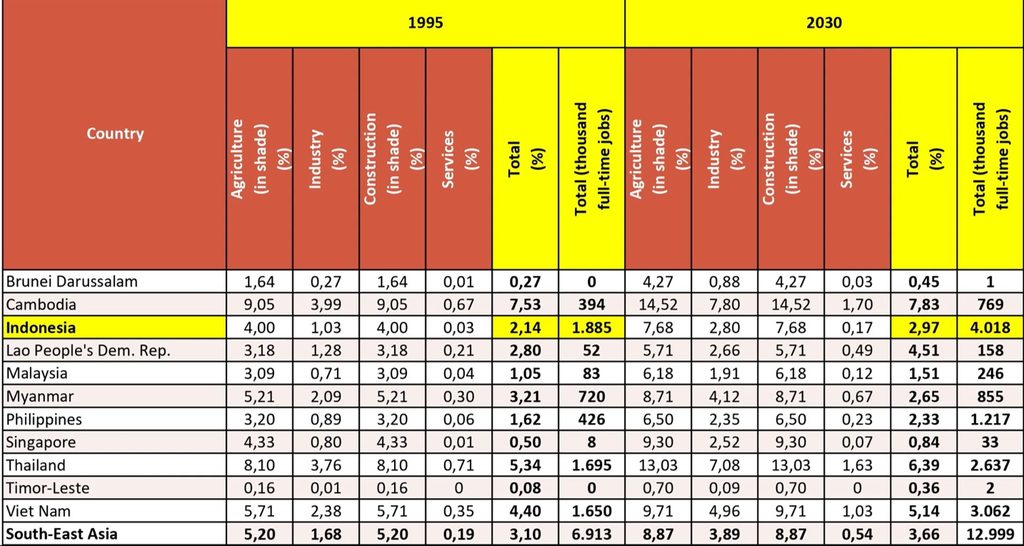
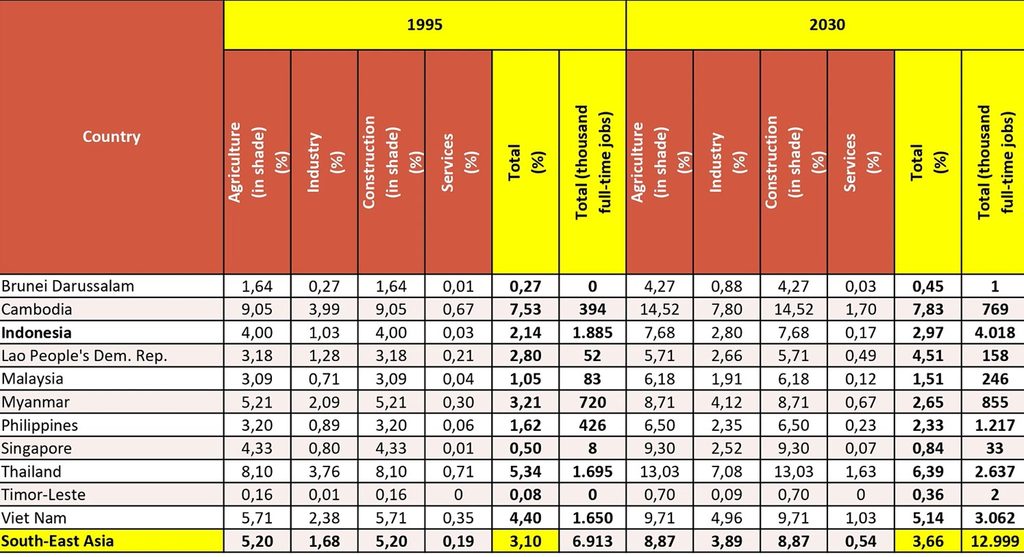
This concept stems from concerns regarding increasingly erratic global climate fluctuations, which suppress work productivity in high-temperature environments—particularly for workers exposed daily to the risk of heat stress. ILO data (2019) indicates that heat-related working hour losses in Indonesia are projected to rise from 2.14 percent (1995) to 2.97 percent (2030)—equivalent to an increase from 1.885 million to 4.018 million affected FTEs (Full-Time Equivalents)—while Southeast Asia is expected to reach 3.7 percent (approximately 13 million FTEs) and the industrial sector accounts for 12 percent of global working hour losses.
THERVIS Combines Sensors, Artificial Intelligence, and Control Systems
To address this issue, the Trio Kalem team designed THERVIS not merely as a temperature-measuring device, but as a thermal control system that leverages artificial intelligence and technologies aligned with the evolution of Industry 5.0.
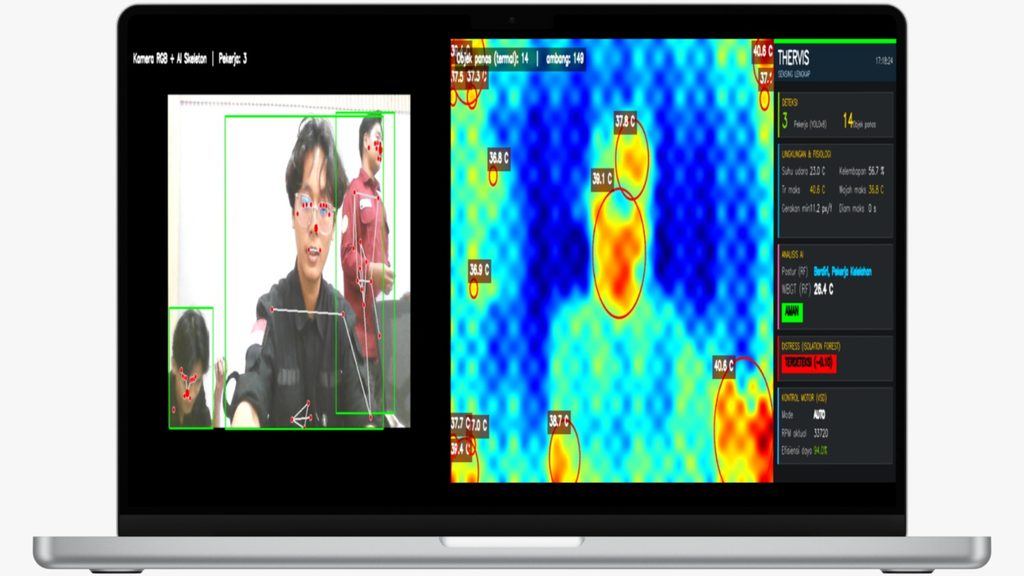
The THERVIS system consists of three interconnected layers. The first is a sensing layer that calculates WBGT values for each zone in real-time. The second is an intelligence layer that processes thermal images using machine learning to map heat sources and worker density. The third is a control layer that automatically regulates exhaust fan speed via a Variable Speed Drive (VSD).
The three layers operate within a closed-loop cycle. Following an adjustment, the thermal conditions are once again detected by the sensors during the subsequent cycle, enabling the system to fine-tune its control based on actual conditions.
This approach distinguishes THERVIS from conventional ventilation systems, which typically rely on a single measurement point or setpoint for the entire area. The use of machine learning enables air circulation to be adjusted according to the specific needs of each zone, rather than being standardized across the entire space.
This approach also offers the potential for up to 49% greater energy efficiency compared to conventional systems (Price et al., 2022). The integration of Internet of Things (IoT) technology and artificial intelligence into OHS systems aligns with advancements in non-invasive workplace monitoring and adaptive control decision-making (He et al., 2023).
From National Achievement to Prototype Development
This achievement was made possible through the guidance of Mr. Deny Arifianto, the team’s faculty advisor, throughout the design process—from refining the theoretical framework to drafting the scientific paper. For Team Trio Kalem, this result is particularly special as it stemmed from the collaboration of three different study programs; these diverse backgrounds were successfully integrated into a cohesive system that ultimately garnered national recognition.
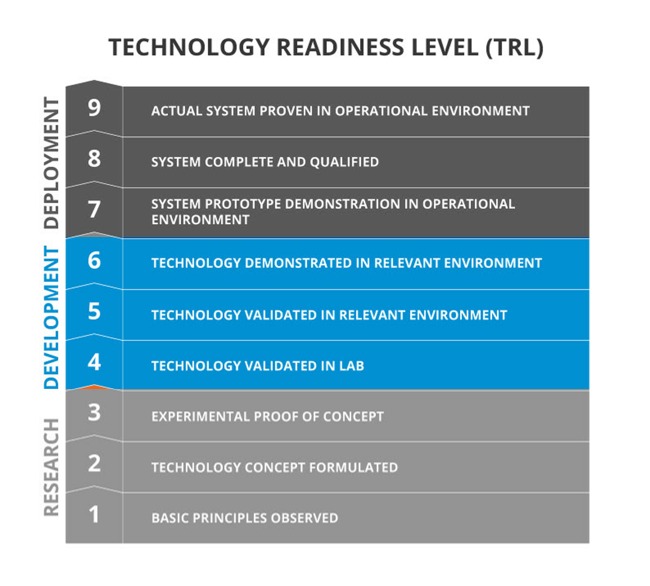
On the Technology Readiness Level (TRL) scale, THERVIS is currently still in the conceptual design stage. The next phase focuses on the development and testing of a prototype directly within an industrial environment.
The testing will be conducted to verify the accuracy of WBGT calculations, machine learning performance, and the effectiveness of the cascade control—which, to date, has only been tested theoretically. Plans for further development also encompass central HVAC systems and outdoor environments.
Through this development, THERVIS is targeted to contribute to five Sustainable Development Goals. These goals include SDG 3 (worker health), SDG 7 (energy efficiency), SDG 8 (work productivity), SDG 9 (AI-based innovation), and SDG 13 (climate change adaptation).
[READ ALSO: UNAIR’s Diploma 3 Taxation Program Explores Partnership with Integrity Tax Management]
Author: Muhammad Naufal Afif
Supervisor: Deny Arifianto, S.Si., M.T.
Editor: Vioretha (Vocational Branding Team)