

VOKASI NEWS – Skin is the largest organ of the human body and plays an essential role in maintaining overall health. It serves as the first line of defense against environmental hazards, helps regulate body temperature, and functions as a sensory organ. Many children still have limited knowledge about skin functions and proper skin care practices despite its importance. Therefore, health education is needed to introduce healthy habits and increase awareness of skin health from an early age.
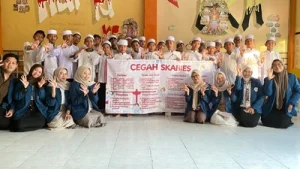
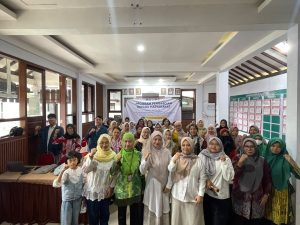
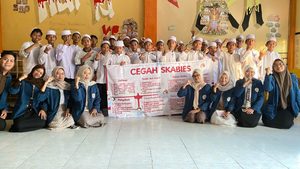
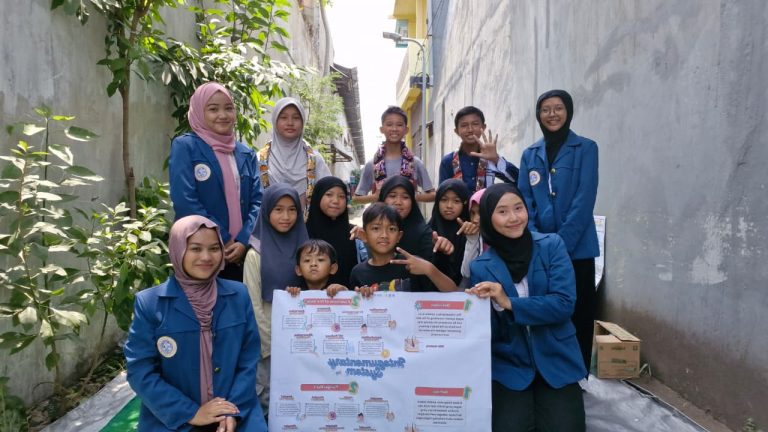
To address this issue, a health education activity entitled “My Skin, My Amazing Protector!” was conducted on April 11, 2026, in Tanah Kali Kedinding, Surabaya. The program targeted children aged 9–14 years and aimed to improve their understanding of the integumentary system, skin functions, and healthy skin care practices. This activity was carried out as part of a project for the Nursing English Course, Semester 4.
Learning Through Interactive Media
The activity began with a pre-test to assess participants’ initial knowledge of the integumentary system. Educational material was then delivered through a lecture supported by an interactive bulletin board. The topics included the definition of the integumentary system, the functions of the skin, common skin disorders, and strategies for maintaining healthy skin in daily life.
The bulletin board was designed using colorful illustrations, simple explanations, and engaging visual elements suitable for children. In addition to the educational session, participants took part in interactive games called “Match Me” and “Guess Me.” These games encouraged active participation and helped reinforce the concepts presented during the lesson. As a result, the learning process became more enjoyable and easier to understand.
According to the Ministry of Health of the Republic of Indonesia, practicing Clean and Healthy Living Behavior (PHBS) is an important step in maintaining health and preventing various diseases, including skin disorders (Ministry of Health of the Republic of Indonesia, 2023). Therefore, providing health education to children is an effective way to promote healthy behaviors and increase health awareness within the community.
Encouraging Knowledge and Healthy Habits
After the educational session, participants completed a post-test to evaluate their understanding of the material. The evaluation showed an improvement in participants’ knowledge regarding skin functions and healthy skin care practices. Throughout the activity, participants actively answered questions, joined discussions, and enthusiastically participated in the educational games.
Positive responses were also received from the participants. One participant stated, “The material was easy to understand because the pictures and games were very interesting.” This feedback demonstrates that interactive learning media can effectively support children’s understanding of health-related information.
This health education activity was conducted by Group 5, consisting of Dewi Humairo, Nidya Athalia Nirmala, Zulfia Habidah, and Asmawati Eka Kencananingsih, students of the Diploma III Nursing Program, Faculty of Vocational Studies, Universitas Airlangga. Through creative and interactive educational approaches, the program is expected to increase children’s awareness of skin health. Furthermore, this program encourage the adoption of healthy behaviors in daily life. Similar initiatives may contribute to improving health literacy and promoting healthier future generations.
Source: Ministry of Health of the Republic of Indonesia. 2023. Clean and Healthy Living Behavior (PHBS).
Author: Dewi Humairo
Supervisor: Hafina Ilmy Muhalla
Editor: Aghnia (Tim Branding Vokasi)