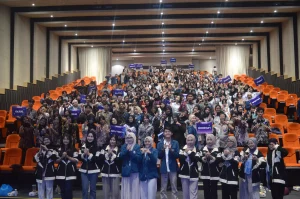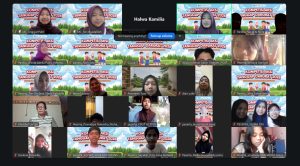


VOKASI NEWS – Students from the Diploma III Nursing Program, Faculty of Vocational Studies, Airlangga University, organized a health education program featuring an Interactive Simulation for Circulatory System Learning for adolescents living in Dukuh Setro 11, Gading, Tambaksari District, Surabaya. The purpose of this activity was to improve participants’ understanding of the human circulatory system through interactive and engaging learning methods.
Initial observations revealed that although most participants recognized the heart as an important organ, many still lacked understanding of how blood circulates throughout the body. This condition highlighted the importance of delivering health education using methods that are suitable and appealing for adolescents.
Developing Health Awareness from an Early Age
Learning about how the human body functions plays an important role in encouraging healthy habits from an early age. However, body systems are often difficult for adolescents to fully understand because they cannot be directly observed.
One of the topics considered challenging is the circulatory system, which involves the coordinated function of the heart, blood vessels, and blood in maintaining overall body health and performance.
Interactive Simulation for Circulatory System Learning
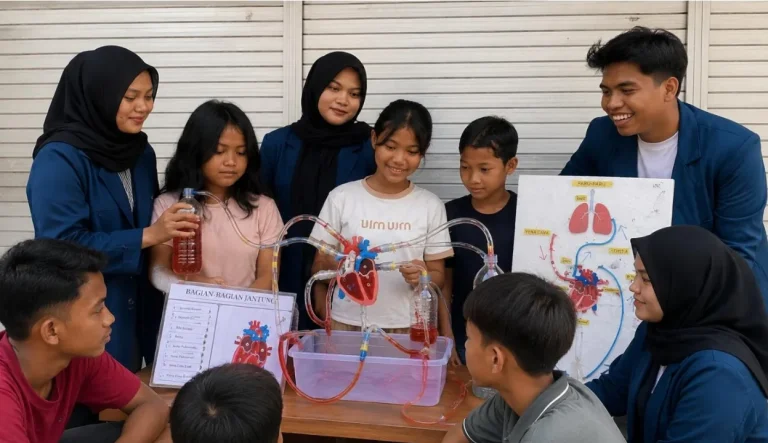
Teaching the circulatory system can be challenging because the processes happen internally and cannot be seen directly. To overcome this difficulty, the student team designed a simple blood circulation simulation that allowed participants to visualize how the system works.
The team used transparent tubes, bottles, and colored liquid as educational tools. Participants were able to observe how blood travels from the heart to the lungs and then throughout the body. This hands-on approach helped connect theoretical explanations with visual experiences.
Interactive learning media like this proved effective in attracting participants’ attention and creating a more enjoyable learning atmosphere compared with traditional teaching approaches.
Participants Showed High Enthusiasm
Throughout the activity, participants demonstrated strong interest and curiosity regarding the topics discussed. They actively asked questions about heart functions, the importance of continuous blood circulation, and everyday habits that influence cardiovascular health.
The discussions and question-and-answer sessions created a dynamic learning environment. Participants became active contributors rather than passive listeners by expressing their opinions and responding to questions from the presenters.
This level of participation indicates that interactive educational approaches can increase learning motivation while improving understanding of health-related topics.
Encouraging Healthy Lifestyle Habits
Besides learning about blood circulation mechanisms, participants also received education on maintaining cardiovascular health. Topics included consuming balanced nutrition, engaging in regular physical activity, getting enough rest, and avoiding unhealthy habits.
The team delivered the information using simple language adjusted to the participants’ age level. This made it easier to understand and apply in everyday life.
As a result, participants not only gained knowledge about the circulatory system but also developed awareness that maintaining physical health should begin at a young age.
Creative Education for a Healthier Future Generation
This community service program conducted by D-III Nursing students at Airlangga University shows that health education can become more effective when delivered through creative and interactive methods.
Simulation-based learning and engaging educational media help participants understand complex concepts more easily. Similar programs can continue to improve health literacy among children and adolescents.
With stronger health knowledge from an early age, younger generations can be better prepared to adopt healthier lifestyles and maintain their well-being in the future.
[BACA JUGA: Transformasi Digital dan AI dalam Kearsipan Jadi Fokus Seminar Indoarsip]
Writers: Nurul Ekajayanti, M. Ali Rihdo Fahrul Mustaqim, Arum Ambarawati Eko Putri, Yusi Agustina Pertiwi
Editor: Cheiza Xaviera (Vocational Branding Team)