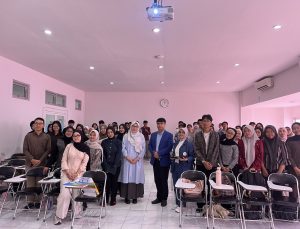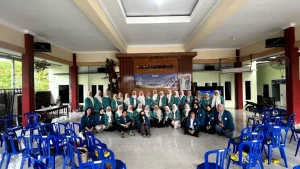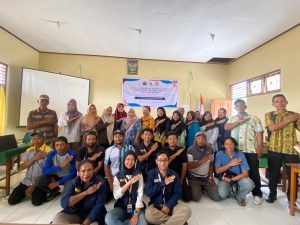



VOKASI NEWS – Diploma III Nursing students from the Faculty of Vocational Studies, Universitas Airlangga educated residents of Sumput Village on proper ambulance communication through the Talking Order by Phone approach to improve emergency preparedness.
Strengthening Community Preparedness Through Emergency Communication Education
Fast and accurate communication saves lives during medical emergencies. However, many people still do not know when to call an ambulance or what information they should give to emergency operators.
To address this issue, Group 7 of the Diploma III Nursing Study Program, Faculty of Vocational Studies, Universitas Airlangga, organized a community outreach program in Sumput Village, Driyorejo District, Gresik Regency. The program introduced the Talking Order by Phone approach to help residents communicate effectively during emergencies.
Learning How to Contact Ambulance Services
The facilitators explained Indonesia’s emergency medical service system and identified situations that require ambulance assistance. They also introduced the national emergency number, 119, and explained when people should use it.
The session taught participants how to deliver essential information during an emergency call. Participants learned to state their identity, the incident location, the victim’s condition, the number of victims, and a callback phone number. Clear information helps emergency responders provide faster assistance.
Interactive Learning Through Simulations
The program combined PowerPoint presentations, educational videos, leaflets, discussions, demonstrations, and emergency call simulations.
Participants practiced making emergency calls through realistic scenarios. They learned how to remain calm, speak clearly, and communicate information in the correct order. These activities strengthened both their knowledge and practical communication skills.
Participants Improved Their Emergency Communication Skills
The team measured participants’ knowledge through pre-test and post-test assessments involving ten community members.
The average score increased from 60 percent before the session to 90 percent afterward. Participants also became more confident in identifying emergency situations and communicating with ambulance operators during simulations.
Encouraging Better Emergency Preparedness
At the beginning of the program, several participants lacked confidence when making emergency calls. Some also struggled to complete the evaluation forms and remember the communication steps.
The facilitators addressed these challenges by giving simple explanations, providing individual guidance, and repeating the simulations. These strategies helped participants understand the material more easily and participate actively.
Through this outreach program, Diploma III Nursing students demonstrated their commitment to improving public health literacy and emergency preparedness. The program encourages communities to communicate more effectively during emergencies and supports faster emergency responses and better patient safety.
[BACA JUGA: Stock Opname Jadi Salah Satu Kunci Akurasi Persediaan pada Usaha Mikro Kecil dan Menengah (UMKM)]
Penulis: Salsatun Quro’atul Aini
Editor: Alkeshar (Tim Vokasi Branding)